
Partnerships
Building Stronger Community Health Through Collaboration
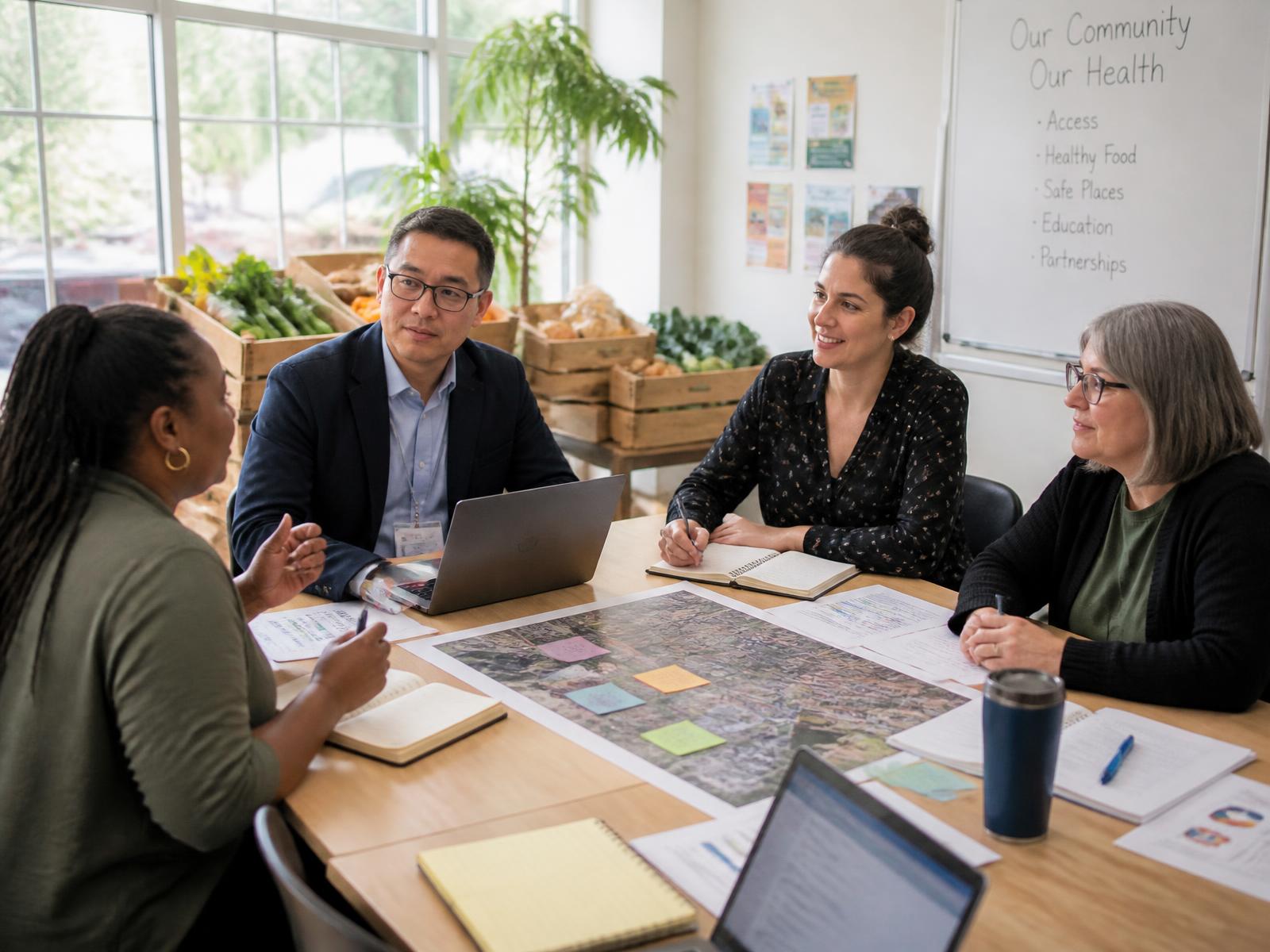
Amana Healthcare partners with healthcare organizations, nonprofits, public agencies, funders, food organizations, universities, and community leaders to develop practical, evidence-informed initiatives that strengthen prevention, access, coordination, and community well-being.
We welcome early-stage ideas, established program opportunities, grant collaborations, pilot concepts, and long-term strategic partnerships.
Partnership Opportunities Open
We are currently seeking organizations interested in community health, Produce Rx, Food as Medicine, nutrition education, prevention, care coordination, outreach, health equity, and evaluation.
Why Collaboration Matters
Complex Health Challenges Require Coordinated Solutions
Community health challenges often cross organizational boundaries. Healthcare providers may identify a need but lack food-distribution capacity. Nonprofits may have trusted community relationships but require evaluation support. Funders may have resources but need strong implementation partners. Food organizations may have products and logistics but need structured referral pathways.
Amana Healthcare seeks to help connect these strengths through clear goals, defined partner roles, practical workflows, transparent communication, and measurable outcomes.
The strongest partnerships are built when each organization contributes what it does best.
Shared Purpose
Partners align around a clearly defined community need and intended outcome.
Complementary Strengths
Each organization contributes distinct knowledge, relationships, resources, or operational capacity.
Defined Responsibilities
Partner roles, decision rights, communication, and reporting expectations are documented.
Measurable Progress
The partnership agrees on what should be tracked, reviewed, and improved.
Potential Partners
Collaboration Across Healthcare and Community Systems
Amana Healthcare welcomes conversations with organizations whose expertise, resources, or community relationships align with prevention, nutrition, education, coordination, health equity, and measurable community impact.
Hospitals and Health Systems
Potential collaboration areas
- Community-benefit programs
- Population-health initiatives
- Produce Rx
- Food as Medicine
- Referral pathways
- Health education
- Community outreach
- Grant implementation
- Program evaluation
- Social determinants of health
Amana Healthcare is not currently a contracted clinical provider.
FQHCs and Community Health Centers
Potential collaboration areas
- Community referrals
- Nutrition access
- Preventive education
- Resource navigation
- Participant engagement
- Produce Rx design
- Community outreach
- Outcome tracking
Nonprofit Organizations
Potential collaboration areas
- Community engagement
- Outreach
- Program delivery
- Participant support
- Coalition building
- Grant implementation
- Local resource coordination
- Trusted communication
Health Departments and Government Agencies
Potential collaboration areas
- Local health priorities
- Public-health campaigns
- Community education
- Prevention initiatives
- Health-equity programs
- Data-informed planning
- Outreach
- Public funding opportunities
Foundations and Grant Funders
Potential collaboration areas
- Program development
- Pilot funding
- Community-benefit initiatives
- Nutrition access
- Health equity
- Evaluation
- Capacity building
- Expansion planning
No prior grant awards are claimed; all funding conversations are exploratory.
Food Banks, Farms, Markets, and Food Organizations
Potential collaboration areas
- Produce supply
- Food distribution
- Redemption models
- Storage and logistics
- Nutrition access
- Food safety
- Culturally responsive food options
- Program data
Universities and Research Organizations
Potential collaboration areas
- Program evaluation
- Research design
- Student engagement
- Community assessments
- Data analysis
- Curriculum support
- Implementation science
- Grant collaboration
No formal research affiliations are in place at this time.
Community and Faith-Based Organizations
Potential collaboration areas
- Trusted outreach
- Community engagement
- Participant recruitment
- Meeting space
- Language support
- Cultural guidance
- Resource navigation
- Community feedback
Employers and Workforce Organizations
Potential collaboration areas
- Employee wellness
- Community outreach
- Health education
- Nutrition programs
- Workforce-health initiatives
- Sponsorship
- Volunteer engagement
- Community investment
Technology, Data, and Evaluation Partners
Potential collaboration areas
- Referral workflows
- Program dashboards
- Communication tools
- Outcome measurement
- Data governance
- Accessibility
- Reporting
- Privacy and security support
Any data workflow must be verified against applicable privacy and security requirements before use.
Ways to Work Together
Flexible Partnership Models for Different Goals and Resources
Partnerships may range from a focused referral relationship to a multi-organization, grant-funded community initiative. The right structure depends on the community need, available resources, partner capabilities, funding, timeline, and intended outcomes.
Referral Partnership
A partner identifies eligible individuals and connects them with an approved initiative through a defined referral process.
May include
- Referral criteria
- Consent and privacy workflows
- Eligibility confirmation
- Follow-up expectations
- Reporting responsibilities
Best-fit partners
Hospitals and health systems, FQHCs, Community clinics, Public agencies
Implementation Partnership
Organizations work together to deliver outreach, education, logistics, participant support, resource navigation, or program operations.
May include
- Shared workplans
- Training
- Defined responsibilities
- Communication schedules
- Operational reporting
Best-fit partners
Nonprofits, Health departments, Community organizations, Health systems
Community Outreach Partnership
A trusted community organization helps build awareness, engagement, accessibility, and local participation.
May include
- Community events
- Education
- Participant communication
- Language support
- Local feedback
- Trusted messengers
Best-fit partners
Faith-based organizations, Community coalitions, Neighborhood nonprofits
Food Access Partnership
A food organization contributes produce, distribution, redemption, storage, logistics, or food-system expertise.
May include
- Produce sourcing
- Distribution locations
- Vouchers or cards
- Food safety
- Redemption tracking
- Participant access
Best-fit partners
Food banks, Farms, Markets, Distributors, Food-system nonprofits
Funding Partnership
A foundation, health system, public agency, employer, or sponsor supports initiative planning, implementation, staffing, technology, participant resources, or evaluation.
May include
- Grant funding
- Sponsorship
- Community-benefit funding
- Pilot support
- Capacity building
- Expansion funding
Best-fit partners
Foundations, Health systems, Public agencies, Employers, Sponsors
Evaluation Partnership
An evaluation, academic, or data partner helps define measures, collect data, analyze results, and support continuous improvement.
May include
- Logic models
- Evaluation plans
- Dashboards
- Surveys
- Data analysis
- Final reports
Best-fit partners
Universities, Research organizations, Evaluation firms, Data partners
Education Partnership
A qualified partner contributes evidence-informed education, training, workshops, curriculum, or subject-matter expertise.
May include
- Nutrition education
- Health-literacy resources
- Facilitator training
- Educational materials
- Community workshops
- Content review
Best-fit partners
Universities, Extension programs, Nutrition organizations, Health educators
Strategic Coalition
Multiple organizations align around a shared community-health need and coordinate resources, funding, implementation, and evaluation.
May include
- Steering committees
- Shared governance
- Multi-year planning
- Joint funding
- Community advisory input
- Expansion strategy
Best-fit partners
Coalitions, Health departments, Multi-sector partnerships, Regional networks
Partner Contributions
Every Partner Brings a Different Strength
A successful partnership does not require every organization to contribute in the same way. Partners may provide expertise, referrals, funding, food access, space, technology, evaluation, community trust, or operational capacity.
Referrals
Identify and connect appropriate participants through approved workflows.
Funding
Support design, staffing, participant resources, logistics, technology, outreach, or evaluation.
Food and Supplies
Provide produce, food resources, educational materials, equipment, or program supplies.
Community Trust
Help communicate with residents and strengthen participation through established local relationships.
Space
Provide locations for meetings, workshops, distribution, outreach, or program activities.
Expertise
Contribute clinical, nutrition, public-health, research, evaluation, operational, legal, or community knowledge.
Technology
Support referrals, communication, reporting, scheduling, dashboards, or data management.
Transportation
Help participants access programs, resources, food distribution, or community services.
Outreach
Support awareness, education, participant engagement, and community communication.
Evaluation
Help define indicators, collect data, analyze results, and document impact.
Staffing
Provide approved personnel, volunteers, educators, coordinators, or subject-matter experts.
Strategic Guidance
Support governance, program planning, policy alignment, sustainability, and scaling.
Specific contributions should be agreed upon based on organizational capacity, legal requirements, funding terms, and the final initiative design.
Amana Healthcare's Role
Supporting Coordination, Design, and Implementation
Depending on the partnership, Amana Healthcare may contribute planning, coordination, community engagement, program operations, education support, resource navigation, documentation, and continuous improvement.
Partnership Coordination
- Convene partners
- Clarify roles
- Organize meetings
- Maintain communication
- Track decisions
- Support accountability
Initiative Design
- Define the need
- Clarify the target population
- Develop goals
- Draft workflows
- Identify activities
- Create implementation plans
Community Outreach
- Support awareness
- Coordinate trusted messengers
- Prepare outreach materials
- Engage local organizations
- Gather feedback
- Strengthen participation
Resource Navigation
- Help organize referral information
- Connect participants with relevant resources
- Support follow-up
- Document community pathways
- Reduce referral fragmentation
This is community resource navigation, not licensed clinical case management.
Education Coordination
- Organize approved educational content
- Coordinate workshops
- Support health literacy
- Prepare participant materials
- Work with subject-matter experts
- Support culturally responsive delivery
Implementation Support
- Coordinate logistics
- Track milestones
- Support documentation
- Maintain workflows
- Identify barriers
- Support corrective action
Grant and Reporting Support
- Support workplans
- Track deliverables
- Organize documentation
- Prepare progress summaries
- Coordinate partner reporting
- Support implementation narratives
Measurement and Improvement
- Define practical measures
- Track participation
- Review implementation
- Gather feedback
- Identify trends
- Recommend improvements
Amana Healthcare's role will be defined by the final partnership agreement, available capacity, funding, regulatory requirements, and approved scope of work.
Priority Opportunities
Current Areas for Partnership Development
Amana Healthcare is actively interested in exploratory discussions around the following community-health opportunities.
Produce Rx Partnership
Help develop a coordinated Produce Rx model connecting healthcare referrals, fresh produce access, nutrition education, community support, and evaluation.
Potential partners
Hospitals, FQHCs, Food organizations, Farms and markets, Funders, Health departments, Universities, Community organizations
Status: In development · Focus: Maryland's Eastern Shore and surrounding communities
Food as Medicine Collaboration
Develop nutrition-centered strategies that connect food access, prevention, education, and healthcare priorities.
Potential partners
Health systems, Community health centers, Food banks, Nutrition organizations, Foundations, Evaluators
Status: In development · Focus: Maryland's Eastern Shore and surrounding communities
Community Health Grant Collaboration
Collaborate on grant opportunities involving prevention, nutrition, outreach, health equity, care coordination, or community-health implementation.
Potential partners
Nonprofits, Health departments, Universities, Foundations, Hospitals, Community coalitions
Status: Open for discussion · Focus: Maryland's Eastern Shore; other areas considered case by case
Community Outreach and Navigation
Build trusted referral, outreach, education, and resource-navigation pathways that connect people with available community support.
Potential partners
Healthcare organizations, Faith-based groups, Community organizations, Public agencies, Nonprofits, Resource networks
Status: In development · Focus: Maryland's Eastern Shore and surrounding communities
Funding and Grants
Turning Funding Opportunities Into Practical Community Initiatives
Many community-health opportunities require organizations with different strengths to work together. A funder may require a healthcare referral partner, a community implementation organization, a food-access partner, an evaluator, and a clearly defined impact model.
Amana Healthcare welcomes discussions with organizations developing grant applications, community-benefit proposals, pilot programs, or funded initiatives aligned with prevention, nutrition, health equity, care coordination, community outreach, and measurable impact.
Amana Healthcare does not present itself as a grant-writing firm and makes no claims about prior funding history or guaranteed awards. Support is offered depending on the opportunity, subject to capacity and partner agreement.
Potential areas of support
Program Concept Development
Clarify the problem, target population, proposed activities, partner structure, and intended outcomes.
Partnership Coordination
Identify needed partner categories and help organize roles, responsibilities, and communication.
Implementation Planning
Develop timelines, workflows, staffing needs, participant pathways, milestones, and operational requirements.
Community Engagement
Support outreach, trusted communication, local input, accessibility, and participant engagement.
Outcome and Reporting Planning
Define practical measures, reporting expectations, evaluation needs, and continuous-improvement processes.
Grant Implementation Support
Support approved workplans, coordination, documentation, deliverables, and partner reporting after funding is awarded.
How Partnerships Begin
A Clear Path From Conversation to Collaboration
Amana Healthcare uses a structured process to help determine whether an opportunity is aligned, feasible, appropriately resourced, and ready for implementation.
- Step 1 of 8
Initial Inquiry
The organization shares its goals, community need, partnership idea, timeline, funding status, and desired role for Amana Healthcare.
- Step 2 of 8
Introductory Conversation
Amana Healthcare and the potential partner discuss alignment, priorities, capabilities, constraints, and next steps.
- Step 3 of 8
Opportunity Assessment
The organizations review the target population, geographic focus, resources, required partners, funding, risks, and expected outcomes.
- Step 4 of 8
Partnership Design
The parties clarify scope, activities, responsibilities, decision-making, communication, reporting, and evaluation.
- Step 5 of 8
Due Diligence
Review licenses, insurance, organizational documents, data requirements, privacy obligations, funding terms, and operational readiness where applicable.
- Step 6 of 8
Written Agreement
Document the approved scope, roles, timelines, deliverables, payment terms if applicable, confidentiality, reporting, and termination conditions.
- Step 7 of 8
Implementation Preparation
Complete training, workflows, materials, technology setup, outreach planning, partner onboarding, and launch readiness.
- Step 8 of 8
Implementation and Review
Begin approved activities, monitor progress, address barriers, review outcomes, and improve the partnership over time.
Before You Reach Out
Information That Helps Us Evaluate an Opportunity
You do not need a complete proposal before contacting Amana Healthcare. However, the following information can help us understand the opportunity and prepare for a productive conversation.
Early-stage ideas are welcome. It is acceptable to mark information as unknown or still in development.
How We Partner
Principles for Responsible Collaboration
- Principle 01
Mission Alignment
The partnership should support community health, prevention, equity, access, education, coordination, or well-being.
- Principle 02
Clear Responsibilities
Each organization should understand its role, decision authority, deliverables, and limitations.
- Principle 03
Honest Communication
Partners should communicate openly about capacity, funding, risks, delays, and challenges.
- Principle 04
Community Respect
Initiatives should reflect local priorities, culture, strengths, and lived experience.
- Principle 05
Regulatory Responsibility
Each partner remains responsible for applicable licensing, privacy, safety, staffing, and legal requirements.
- Principle 06
Data Stewardship
Data should be collected only when necessary and handled according to approved privacy, security, and reporting requirements.
- Principle 07
Measurable Goals
The partnership should define realistic goals and meaningful indicators of progress.
- Principle 08
Continuous Improvement
Partners should review implementation, learn from results, and strengthen the initiative over time.
Questions
Frequently Asked Questions
Still deciding whether your organization is a fit? Send an inquiry and we can work through it together.
Ready to begin? Submit a partnership inquiry.
Start the Conversation
Let's Explore What We Can Build Together
Whether you have an early-stage idea, an identified community need, a grant opportunity, an existing initiative, or a need for implementation support, Amana Healthcare welcomes the opportunity to learn more.
Exploratory conversations do not require a complete proposal or confirmed funding.